The Ultimate Showdown: Asus Tuf Gaming A16 2025 vs Tp Link Archer Be9700 for 2026
Technology buyers in 2026 face a perennial question: where to invest limited budget and attention to get the best real-world gaming and productivity experience? On one side is the Asus TUF Gaming A16 2025, a purpose-built gaming laptop family that promises portability, graphics performance, and a turnkey solution for modern titles. On the other side is the TP‑Link Archer Be9700, a high-end home router geared toward unlocking network performance for multiple devices, low-latency gaming, and smarter home networking. At first glance this looks like comparing apples and routers, but the comparison is practical: for many people the most impactful upgrade isn't always a faster GPU or a new laptop — sometimes it’s a better network. This article evaluates both products through the lens of real-world use cases, buyer priorities, and 2026 buying decisions.
Introduction: Why compare a gaming laptop and a router?
Consumers rarely buy a laptop and a router as equivalent choices, yet both influence the daily digital experience. A new gaming laptop increases framerates, reduces load times, and brings modern display and cooling improvements. A sophisticated router improves ping stability, reduces packet loss, and affects every device in the home. For gamers, streamers, remote workers, and hybrid households, the question is pragmatic: where will a marginal dollar produce more perceived benefit in 2026?
This article breaks down typical buyer concerns — performance, longevity, cost-per-benefit, portability, and ecosystem impact — and applies them to the Asus TUF Gaming A16 2025 and the TP‑Link Archer Be9700. The goal is an actionable, real-world comparison that helps readers decide which upgrade or purchase makes the most sense.
Product overviews
Asus TUF Gaming A16 2025 — portable power for gamers
The Asus TUF Gaming A16 series represents Asus’s mid-range to value-oriented gaming laptop lineup with a focus on durability and thermal design. The 2025 refresh continues that approach: combinations of current-generation mobile processors, discrete mobile GPUs, cooling improvements, and a 16-inch display that balances immersive visuals with manageable weight. For buyers who prioritize a single-device solution — gaming, content creation, and travel-friendly performance — the TUF A16 family is a natural fit.
TP‑Link Archer Be9700 — a modern home networking hub
The Archer Be9700 sits in TP‑Link’s upper-range consumer networking lineup. It aims to serve high-bandwidth households with multiple concurrent users, smart home devices, and competitive gamers who rely on very low latency. The device typically includes advanced Wi‑Fi 6/6E (or enhanced Wi‑Fi 6 features depending on regional SKUs), multiple high-speed Ethernet ports, robust QoS and traffic-shaping features, packet prioritization modes, and support for modern security firmware. For households where many devices share a single internet connection, a router like the Be9700 can significantly improve the experience for everyone.
In-depth analysis: What each product delivers in real-world use
Gaming and raw performance (Asus TUF Gaming A16 2025)
For single-player and competitive gamers, the TUF A16 delivers immediate, measurable benefits: higher native framerates, better visuals, and lower load times compared to older laptops. The portable hardware handles AAA titles and modern esports games at comfortable settings. Thermal management and power profiles allow longer sustained loads, which matters during extended sessions or while streaming simultaneously.
Real-world buyers care about sustained performance rather than short benchmark spikes. The TUF family’s thicker chassis and improved fans tend to maintain clock speeds longer than thinner ultraportable laptops, which translates into fewer framerate drops during long matches. For creatives, the TUF’s CPU and GPU combination supports faster rendering and encoding times versus integrated-only systems.
Network stability and multiplayer responsiveness (Archer Be9700)
Online gaming and cloud-based workflows are limited by the weakest link in the chain. When internet infrastructure and last-mile throughput are adequate, the router becomes critical. The Archer Be9700’s strengths show up as reduced jitter, fewer micro-stutters in multiplayer sessions, and more predictable latency when multiple users are streaming or downloading simultaneously.
Find top-rated Laptops & Computers products at great prices.
See Deals →Households with multiple gamers, 4K streamers, and smart home devices benefit from a router that can manage traffic prioritization. For example, when a family member starts a large cloud backup or a neighbor’s device floods the network with updates, a router with good QoS prevents severe latency spikes on gaming devices. For live streamers, stable upload performance and consistent packet delivery are essential; a modern router reduces dropped frames and reconnects during live sessions.
Portability, ergonomics, and lifestyle fit
Choosing between the two sometimes comes down to lifestyle. The Asus TUF A16 is a mobile workstation: it moves with the buyer. It’s ideal for students, traveling developers, LAN party attendees, and anyone who needs to game or work from different locations. Conversely, the Archer Be9700 is fixed infrastructure — a one-time installation that benefits all in a given location but doesn’t help when away from home.
Longevity and upgrade paths
Laptops age through two vectors: internal component obsolescence and physical wear. The TUF A16’s discrete GPU and modular RAM/SSD options allow modest aftermarket upgrades, but the mobile GPU generation eventually lags behind desktop counterparts. Replacement after 3–5 years is common for gamers who want to keep up with new titles.
Routers often last longer in terms of usefulness because Wi‑Fi standards evolve incrementally. However, a router can become the bottleneck once ISP speeds and device density increase. The Be9700 will offer tangible value for many years, particularly if firmware support continues and security updates are provided. Upgrading a router is cheaper than replacing a laptop but impacts the whole household at once.
Pros & Cons
Asus TUF Gaming A16 2025
- Pros: Portable gaming and productivity in one device; typically strong thermal design for sustained performance; upgradeable RAM/SSD in many configurations; good balance between display size and mobility; turnkey experience for gaming and content creation.
- Cons: Higher upfront cost than network upgrades alone; battery life typically worse under gaming loads; fixed GPU generation limits long-term upgradeability; heavier and bulkier than ultraportables.
TP‑Link Archer Be9700
- Pros: Improves network experience for every device in a home; reduces latency and jitter in congested environments; supports advanced QoS and traffic management; often cheaper than a mid-range gaming laptop; easy to pair with mesh nodes for wider coverage.
- Cons: No impact when the user is away from home; limited effect if ISP or modem is the bottleneck; firmware and feature set vary by region; setup can be technical for less experienced users.
Side-by-side comparison
| Category | Asus TUF Gaming A16 2025 | TP‑Link Archer Be9700 |
|---|---|---|
| Primary purpose | Portable gaming and content creation | Home and small-office networking, low-latency traffic management |
| Best for | Gamers who travel, streamers on the go, students, creators | Households with many devices, competitive online gamers at home, multi-user streaming |
| Impact on gaming experience | Direct: higher framerates, better visuals, faster local performance | Indirect: lower latency and fewer network-induced issues |
| Portability | High | None (fixed) |
| Upgrade cost | Medium–High (replacement after 3–5 years for performance demands) | Low–Medium (router upgrades are less expensive than laptops) |
| Complexity to set up | Low (out of box gaming ready, drivers/updates required) | Medium (network setup, QoS tuning, mesh expansion if needed) |
| Household impact | Single user or localized (device-specific) | All users and devices in network |
| Longevity (useful life) | 3–5 years for high-end gaming needs | 4–7 years depending on Wi‑Fi standards and firmware support |
Real-world use cases and buyer priorities
Case 1: The traveling competitive gamer
For someone who attends LANs, travels frequently, or often plays from cafes, a powerful, rugged laptop like the TUF A16 is the clear winner. Network improvements at home will not help when away, so spending on a reliable portable gaming rig yields the most direct benefit.
Case 2: The household with multiple streamers and gamers
In a busy home where multiple 4K streams, cloud backups, and online gaming happen concurrently, a router upgrade can have outsized impact. The Archer Be9700’s prioritization features and multi-device handling reduce conflicts and provide a smoother, more consistent experience for everyone.
Case 3: The streamer who broadcasts from home
A streamer who broadcasts live from a fixed location benefits from both upgrades, but if budget forces a single choice, the router can be the better first step. Stable upstream bandwidth reduces dropped frames and bitrate fluctuations. After a robust network is in place, upgrading the laptop or PC can further enhance stream quality.
Find top-rated Laptops & Computers products at great prices.
Browse Now →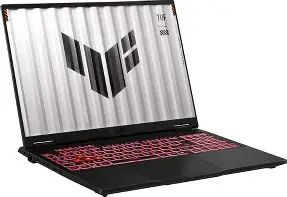
Case 4: The content creator who edits and renders large projects
Content creators need compute power for rendering and encoding. They will see immediate productivity gains from the TUF A16’s CPU and GPU advantage. Network improvements are secondary unless frequent cloud sync or large asset transfers are part of the workflow.

Buying guide: How to decide in 2026
When choosing between the Asus TUF Gaming A16 2025 and the TP‑Link Archer Be9700, buyers should consider the following checklist and questions. The guide emphasizes practical decision-making and avoids brand or model blind loyalty.
Step 1 — Identify the primary pain point
- If local performance (framerates, rendering times, offline gameplay) is the bottleneck, lean toward the laptop.
- If online stability, ping spikes, and multi-device congestion are the problem, prioritize the router.
Step 2 — Measure current constraints
- Run local performance checks: if current CPU/GPU struggles to maintain desired settings in games or render jobs take too long, a laptop upgrade helps.
- Test network with a wired client during peak hours: if upload/download capacity is available but latency/jitter is high, a better router or QoS configuration may fix it.
Step 3 — Budget and total cost of ownership
- Compare the up-front cost vs. number of affected users. A router’s cost is amortized across the household.
- Consider hidden costs: a laptop may need replacement sooner; a router may require mesh nodes to cover a larger home.
Step 4 — Futureproofing and upgrade paths
- For gaming longevity, check the laptop’s cooling and power envelope — better thermals extend useful life.
- For networking, verify whether the router supports the latest Wi‑Fi band(s), Ethernet speeds, and firmware updates; plan mesh expansion if coverage is a concern.
Step 5 — Practical test and configuration
- Borrow or demo hardware when possible. Sitting at a laptop for a day or testing router settings on-site reveals real constraints.
- For routers, invest time in placement, Wi‑Fi channel scanning, and basic QoS configuration — often a modest setup yields large improvements.
Questions to ask before buying
- How often is gaming or streaming done away from the home network?
- How many simultaneous high‑bandwidth activities occur during peak hours?
- Are there future ISP upgrades planned (faster fiber) that would require a more capable router?
- Does the laptop configuration offer serviceable RAM/SSD upgrades to extend its lifespan?
Practical configuration tips
Optimizing the Asus TUF Gaming A16 2025
- Enable performance profiles only when plugged in to avoid throttling during unplugged gaming sessions.
- Keep GPU drivers and firmware up to date; use manufacturer tools to calibrate fan curves for balanced thermals and noise.
- Invest in a fast NVMe SSD and sufficient RAM (16GB minimum for modern gaming and 32GB for heavy content work).
Getting the most from the Archer Be9700
- Place the router centrally and elevate it away from obstructions; physical placement often matters more than extra features.
- Use wired Ethernet for the primary gaming rig when possible — routers reduce but cannot eliminate wireless variability.
- Configure QoS or game-priority modes, and set bandwidth reservations for critical devices (streaming encoder or gaming PC).
- Keep firmware current and isolate smart-home devices on a separate guest network to reduce broadcast noise.
Verdict and practical recommendations
There is no universal winner in a straight comparison between a gaming laptop and a router; the right choice depends on where the user experiences the most friction. The Asus TUF Gaming A16 2025 is the clear choice for portability, local performance, and single-user productivity gains. It answers problems of low FPS, long render times, and the desire to game on the move. The TP‑Link Archer Be9700, meanwhile, offers a high return on investment in multi-user homes where network congestion and latency undermine every connected device.
For many households the optimal strategy is staged: first address the bottleneck that affects the most people. If everyone in the home suffers from streaming interruptions and multiplayer lag, a router upgrade benefits all. If the user is primarily an on-the-go gamer or creator and the home network is already adequate, investing in the laptop yields more direct personal benefit.
Conclusion
Comparing the Asus TUF Gaming A16 2025 and the TP‑Link Archer Be9700 highlights an important buying principle for 2026: always target the weakest link. A powerful laptop cannot hide a poor network, and a premium router cannot give better local compute performance. Buyers should diagnose the real-world pain points — whether local rendering and framerates or household-wide network congestion — then invest where the marginal improvement is most meaningful.
Both devices deliver strong value in their domains. The TUF A16 is an effective one-device solution for gamers and creators who need mobility and sustained performance. The Archer Be9700 is a practical infrastructure upgrade that makes every connected experience smoother at home. The smartest purchase is the one that solves present problems while fitting planned lifestyle changes over the next several years.