I Switched to the Miofive Mirror 1 Dash Cam and Here is What Happened
The landscape of automotive safety technology has shifted dramatically over the last decade. What was once a niche accessory for commercial drivers or tech enthusiasts has become a standard requirement for the everyday commuter. Among the various form factors available, the mirror-mounted dash cam has emerged as a favorite for those who value both aesthetics and utility. The Miofive Mirror 1 Dash Cam represents a high-water mark in this specific category, promising to replace the traditional rearview mirror with a high-definition digital interface that captures everything happening both in front of and behind the vehicle. Shifting from a standard windshield-mounted unit to this integrated mirror system reveals a lot about the current state of consumer electronics and the practical realities of modern driving.
The Evolution of the Digital Rearview
For most drivers, the rearview mirror is a passive tool, a simple piece of reflective glass that has remained largely unchanged since the early 20th century. However, traditional mirrors have inherent limitations. They are susceptible to blind spots created by thick rear pillars, obscured by tall passengers or bulky cargo, and often struggle with glare from trailing headlights at night. The Miofive Mirror 1 seeks to solve these legacy issues by digitizing the entire experience. By overlaying a 10-inch IPS touchscreen onto the existing mirror housing, it transforms a piece of glass into a command center. The switch to a mirror-style dash cam is often motivated by a desire for a cleaner dashboard, as it eliminates the need for suction cups or adhesive mounts that clutter the line of sight through the windshield.
Analysis of Engineering and Design
The construction of the Miofive Mirror 1 reflects a commitment to premium hardware. It utilizes a Sony IMX415 sensor for the front camera, which is a critical piece of information for any buyer concerned with night vision and clarity. The front-facing lens records in true 4K resolution (3840 x 2160), while the rear camera provides 1080P coverage. This dual-channel setup is essential for documenting incidents such as rear-end collisions or tailgating behavior. The physical installation involves strapping the device over the existing factory mirror using high-tension rubber bands. This non-permanent mounting solution is particularly attractive for those who lease their vehicles or prefer not to perform invasive modifications to their car’s interior.
One of the most immediate changes noted during use is the field of view. A standard car mirror typically offers a 20 to 30-degree field of vision, heavily restricted by the car's interior geometry. The Miofive Mirror 1 uses a wide-angle lens for the rear camera, typically spanning 150 degrees. This provides a "streaming media" view that effectively eliminates the rear C-pillars of the vehicle from the driver's perspective. When the screen is active, the driver sees a wide, unobstructed panorama of the road behind them. If the screen is turned off, the surface still functions as a traditional reflective mirror, though the tint is slightly darker than stock glass due to the nature of the semi-transparent mirror coating.
Real-World Performance and Video Quality
In the world of electronics, resolution is only half the story; processing power and light management are what truly define a dash cam's worth. During daylight hours, the 4K front camera captures license plates with remarkable precision, even at highway speeds. The high dynamic range (HDR) capabilities are evident when driving through tunnels or under heavy foliage, where the sensor must rapidly adjust to changing light levels to prevent "white-out" or deep shadows. The Sony Starvis technology integrated into the sensors ensures that even in low-light urban environments or pitch-black rural roads, the footage remains usable. This is a primary concern for buyers, as many accidents occur during twilight or night hours when visibility is compromised.
The rear camera performance is equally vital. Because it is usually mounted externally above the license plate or internally against the rear window, it is the first line of defense in "hit and run" scenarios. The Miofive Mirror 1 manages to maintain a stable frame rate, which is crucial for capturing the smooth movement of vehicles. A common complaint with lower-end mirror cams is "ghosting" or lag in the digital display, which can be disorienting for a driver trying to judge distances. The Mirror 1 avoids this through a high-speed processor that ensures the latency between the physical event and the screen display is negligible.
Feature Deep-Dive: GPS and AI Integration
Beyond simple video recording, the Miofive Mirror 1 includes several smart features that differentiate it from budget competitors. The built-in GPS module is a standout, as it embeds speed and coordinate data directly into the video files. In the event of a legal dispute or insurance claim, being able to prove exactly where you were and how fast you were traveling is invaluable. The device also features a G-sensor with adjustable sensitivity. If the car detects a sudden impact or sharp braking maneuver, it automatically locks the current recording fragment into a protected folder, ensuring that the critical evidence is not overwritten by the loop recording system.
Find top-rated Electronics products at great prices.
Shop Amazon →Furthermore, the user interface is remarkably intuitive. The 10-inch display supports touch gestures, allowing the driver to swipe up or down to adjust the viewing angle of the rear camera—a digital tilt of sorts. Swiping left or right allows for switching between the front view, the rear view, or a split-screen mode. This interactivity is a significant upgrade over traditional dash cams that rely on tiny, tactile buttons that are difficult to navigate while seated in the driver's chair. The inclusion of 5GHz Wi-Fi is another technical advantage, enabling much faster video downloads to a smartphone via the Miofive app compared to the standard 2.4GHz bands found in older hardware.
Pros and Cons
Every piece of consumer electronics involves trade-offs. While the Miofive Mirror 1 is a high-end solution, it is important to weigh its strengths against the practical hurdles of its form factor.
- Pros: Superior 4K resolution provides excellent evidence-grade footage of license plates and road signs.
- Pros: The 10-inch IPS touchscreen is bright enough to be visible even in direct sunlight, reducing the "washout" effect common in cheaper screens.
- Pros: Sony Starvis sensors ensure top-tier performance during night driving and in inclement weather.
- Pros: 5GHz Wi-Fi allows for seamless file transfers to mobile devices for quick sharing with authorities or insurance providers.
- Pros: The wide-angle rear view significantly reduces blind spots, making lane changes and reversing much safer.
- Cons: Installation can be complex if the user desires a "hidden" look, often requiring a hardwire kit to be routed through the vehicle's pillars.
- Cons: Mirror-style cams can sometimes be distracting for drivers who are not accustomed to a constant video feed in their peripheral vision.
- Cons: The reflective surface can occasionally catch interior reflections if the screen brightness is set too low during the day.
Technical Comparison: Mirror 1 vs. Competition
To understand the value proposition of the Miofive Mirror 1, it is helpful to compare its specifications against the broader market of dash cameras, including standard dash cams and entry-level mirror cams.
| Feature | Miofive Mirror 1 | Standard 4K Dash Cam | Entry-Level Mirror Cam |
|---|---|---|---|
| Front Resolution | 4K (2160p) | 4K (2160p) | 1080p or 2K |
| Rear Resolution | 1080p | 1080p | 720p |
| Display Size | 10-inch Full Touch | 2-inch or No Screen | 7 to 9-inch Touch |
| Sensor Type | Sony IMX415 (Starvis) | Varies (High-end) | Generic CMOS |
| Wi-Fi Speed | 5GHz / 2.4GHz | 2.4GHz | None or 2.4GHz |
| GPS Navigation | Built-in | Often External | Optional / External |
Comprehensive Buying Guide for Mirror Dash Cams
When considering a switch to a mirror-style dash cam like the Miofive Mirror 1, buyers should evaluate several technical and practical factors to ensure the device meets their specific needs and vehicle configuration.
1. Sensor Quality and Night Vision
The most important part of any dash cam is the image sensor. Many manufacturers claim "4K" resolution, but this is sometimes achieved through software interpolation rather than a native high-resolution sensor. Look for reputable sensor names like Sony Starvis. High-quality sensors are particularly important for mirror cams because the rear camera is often exposed to the glare of following headlights. A sensor with poor light handling will simply show a white blur where a license plate should be.
2. Screen Brightness and Anti-Glare Properties
Since the device sits where your rearview mirror resides, it will be subjected to intense light from the windshield. A screen with low nit-brightness will be impossible to see on a sunny day. Furthermore, ensure the device has an anti-glare coating. The Miofive Mirror 1 uses a specialized multi-layer glass that balances the need for reflectivity (when the screen is off) and transparency (when the screen is on).
Find top-rated Electronics products at great prices.
View Offers →3. Storage and Loop Recording
4K video generates massive amounts of data. A single minute of footage can exceed several hundred megabytes. Buyers must ensure the device supports high-capacity microSD cards, preferably U3 or V30 rated for high-speed writing. Loop recording is a standard feature that overwrites the oldest footage when the card is full, but the "emergency lock" feature must be reliable so that important clips are never deleted automatically.
4. Parking Mode and Power Management
Many drivers want their dash cam to protect the car while it is parked. This requires a "hardwire kit" that connects the camera directly to the vehicle's fuse box, allowing it to draw power even when the engine is off. The Miofive Mirror 1 supports time-lapse parking recording and impact detection. However, buyers should check if their vehicle's battery can handle this draw or if they need a dedicated dash cam battery pack, especially for older vehicles.
5. GPS and Speed Logging
While some see GPS as an optional extra, it is a critical component for legal protection. Having the speed and location stamped onto the video provides a level of context that visual evidence alone cannot offer. Some cameras use an external GPS "puck" that must be mounted on the dashboard, but integrated GPS (like that in the Mirror 1) is preferred for a cleaner interior look.
Conclusion
The transition to the Miofive Mirror 1 Dash Cam is more than just an upgrade in resolution; it is a fundamental shift in how a driver interacts with their vehicle's surroundings. By replacing a passive mirror with an active digital display, the system provides a level of situational awareness that traditional optics simply cannot match. The 4K front-facing clarity ensures that every detail of the road ahead is documented with professional-grade precision, while the Sony-powered rear camera effectively deletes the blind spots that have plagued drivers for decades.
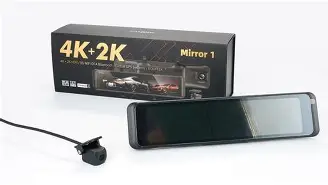
While the installation and the initial adjustment to a digital screen require some effort, the benefits for safety and security are substantial. In an era where "road rage" incidents and insurance fraud are on the rise, having a reliable, high-definition witness is a prudent investment. The Miofive Mirror 1 stands out in the crowded electronics market by focusing on the fundamentals: build quality, sensor performance, and user experience. For the modern driver looking to modernize their cockpit while adding a significant layer of protection, this mirror-style dash cam represents one of the most compelling solutions available today. Whether it is for the daily commute or a cross-country road trip, the peace of mind provided by such a sophisticated device is hard to overstate. It subtly transforms the driving experience, making the road feel a little more transparent and the journey a lot more secure.