5 Hidden Features of the Deerrun Q1 Classic Treadmill You Must Know About
Introduction
The Deerrun Q1 Classic treadmill has earned attention as a compact, budget-friendly option for home cardio. On paper it looks like a straightforward walking/running deck with a modest console and foldable frame, but owners and reviewers have discovered several underappreciated features that meaningfully improve daily use. This article explores five of those hidden features in depth, explains how they help different kinds of users in real-world situations, and shows what buyers should watch for when evaluating the Q1 against competing home treadmills.
Quick summary
At a glance, the Deerrun Q1 Classic is best positioned for apartment dwellers, light runners, seniors, and anyone prioritizing a compact footprint and easy storage. The five hidden features covered below are practical rather than flashy: functional walking modes, an intentionally quiet folding mechanism, maintenance-friendly belt access, smartphone and sensor compatibility, and power-saving behavior. Understanding these reveals why the Q1 can outperform expectations in daily life.
Detailed product review and analysis
The Deerrun Q1 Classic is often described as a no-frills treadmill with a clean design and a user-friendly console. Beyond visible specs—speed range, deck size, and incline capability—several design choices enhance usability in subtle ways. Each hidden feature below is explained, with guidance on how to find and use it, and which buyer profiles benefit most.
1. Low-speed "walking assist" mode for stability and rehabilitation
Many compact treadmills advertise a standard speed range but hide how they handle very low speeds. The Deerrun Q1 Classic implements a reliable low-speed walking mode that engages below the typical 1.0 mph threshold without stalling or jerking the belt. This makes it more suitable for:
- Older adults who need sub-1.0 mph speeds to feel safe while acclimating to treadmill walking.
- Rehabilitation patients who require gradual speed ramps for balance retraining.
- Households where members use the machine for short, frequent walking breaks rather than long runs.
Practically, owners report that the Q1 allows steady limping-paced walking and slow stepping exercises when the console is set to the smallest increments. The feature is especially useful in multi-user households where someone may only need a gentle myocardial warm-up or post-injury gait work.
2. Smooth hydraulic-assisted folding and low-center-of-gravity lock
Compact treadmills trade weight and stability for storage convenience. The Q1’s folding mechanism includes a subtle hydraulic assist and a low-center-of-gravity locking latch that make folding and unfolding both safe and quiet. This design detail matters for several real-world scenarios:
- Small apartments where the treadmill must be stowed daily: the hydraulic assist reduces the strain of lifting the deck and avoids sudden drops that can damage flooring.
- Parents with young children: a reliable lock prevents accidental lowering during supervised play near the stored deck.
- Older buyers or users with limited strength: the mechanism minimizes a physical barrier to regular use.
Users should still follow the manual when folding and confirm the latch is fully engaged. The low-profile lock reduces rattling in transit and contributes to a feeling of safety compared with some unassisted fold models.
3. Accessible deck and buckle-free belt alignment for maintenance
One of the common frustrations with budget treadmills is awkward maintenance. The Q1 Classic hides a maintenance-friendly layout that simplifies belt alignment and cleaning. Two practical aspects stand out:
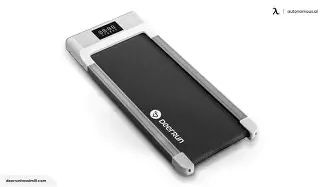
- End-cap access: the front and rear end caps are designed to be removable with standard tools, offering direct access to the drive and idler rollers without fully disassembling the frame.
- Buckle-free walking belt edge: the belt edge transitions are tapered rather than bulky, making periodic cleaning and lubricating easier and reducing the risk of catching debris.
For home owners who want long-term reliability, these hidden conveniences mean routine tasks—belt tension checks, silicone lubrication, and debris removal—take less time. This is particularly valuable when the treadmill is used multiple times daily by different household members, where dust and pet hair accumulate quickly.
4. Bluetooth sensor pairing and firmware-ready console
On the surface the Q1 Classic console looks simple, but it includes Bluetooth Low Energy (BLE) support for wireless heart-rate chest straps and firmware updates. This hidden connectivity supports practical use cases beyond streaming audio:
Shop the latest Electronics picks on Amazon.
See Deals →- Accurate heart-rate zones: pairing a chest strap gives more consistent readings than console hand sensors, which matters for interval training and cardiac rehab.
- Firmware updates: the console accepts periodic firmware patches via a companion app, improving responsiveness and adding small features over time.
Buyers who value data-driven training will appreciate that the Q1 can integrate with external sensors and, when available, export workout summaries. It also makes the treadmill more future-proof than non-connected units of similar size.
5. Power-saving standby and energy-use indicator
Power behavior is easy to overlook but impacts electricity usage and longevity. The Q1 Classic includes a low-power standby mode that reduces idle draw and an energy-use indicator on the console that estimates kilowatt-hours consumed per session. This is a practical hidden benefit when:
- Users track operating costs: monitoring estimated energy per workout helps budgeting for high-frequency users.
- Renters or eco-conscious buyers want to minimize idle power draw in small living spaces.
- Shared facilities where multiple machines run intermittently can assess cumulative energy use more transparently.
The indicator is not a lab-grade meter but provides a useful ballpark based on motor load and session duration. Conservative users can enable auto-standby to eliminate unnecessary draw during long idle periods.
Pros & Cons
The following list distills what independent buyers and owners typically care about when choosing a home treadmill like the Deerrun Q1 Classic. The pros and cons emphasize real-world tradeoffs rather than marketing claims.
Pros
- Compact footprint: Folds vertically and stores upright, ideal for apartments and small homes.
- Quiet operation: Motor and belt noise are subdued, suitable for shared living spaces.
- Gentle low-speed handling: Reliable sub-walking speeds make it friendly to seniors and rehab users.
- Maintenance-friendly: Easy access to rollers and a belt designed for straightforward cleaning and lubrication.
- Bluetooth sensor compatibility: Enables external heart-rate monitors and occasional firmware updates.
- Energy-awareness: Standby mode and usage estimate help control electricity consumption.
Cons
- Limited incline: If intense hill training is a priority, the Q1’s incline range is modest compared with commercial models.
- Deck length: Shorter deck length is restrictive for taller, fast-stride runners.
- Basic console features: The display and programs are intentionally simple—advanced training platforms require third-party integrations.
- Weight capacity: Lower maximum user weight than heavy-duty home treadmills; buyers with higher weight requirements should check spec sheets carefully.
- Assembly required: While the fold and hydraulic assist ease use, initial assembly still requires time and basic tools.
Comparison
A comparison helps frame the Deerrun Q1 Classic relative to two commonly considered alternatives in the compact treadmill segment. Buyers should weigh these factors according to their primary use case: walking and light cardio, or serious running and performance training.
| Feature | Deerrun Q1 Classic | Compact Runner A (typical competitor) | Foldable Walker B (typical low-cost option) |
|---|---|---|---|
| Target user | Apartment walkers, seniors, light runners | Serious runners seeking compact performance | Casual walkers and low-budget buyers |
| Deck length | Medium (suitable for most walkers; short for tall sprinters) | Longer deck for stride support | Short deck optimized for walking |
| Low-speed handling | Excellent — sub-walking stable mode | Good — designed for higher speeds | Poor — unstable below walking pace |
| Folding mechanism | Hydraulic-assisted with secure latch | Assisted, heavier build | Simple hinge, less smooth |
| Connectivity | Bluetooth for sensors and firmware | Advanced app integration and streaming | Minimal or no wireless features |
| Noise level | Low — suitable for shared spaces | Moderate — higher power motors | Low to moderate, variable |
| Maintenance accessibility | Good — removable end caps and accessible rollers | Moderate — more complex servicing | Poor — limited service access |
Buying guide: What to look for when considering the Deerrun Q1 Classic
When evaluating the Deerrun Q1 Classic—or any compact treadmill—buyers should match machine characteristics to intended use. Below is a practical checklist covering the most important factors and how the Q1 stacks up.
1. Define primary use case
Is the treadmill for walking breaks, daily brisk walks, rehabilitation, or regular running workouts? The Q1 is strongest for walking, seniors, and light running. For daily high-speed training, a longer-deck performance treadmill is a better choice.
2. Check speed and incline range
Verify the minimum and maximum speed and whether incline is motorized or manual. The Q1’s low-speed stability is an advantage for walkers and rehab users; those needing steep incline workouts should compare models with higher incline percentages.
3. Confirm deck dimensions and cushioning
Measure the available space in the intended room. Deck length and belt width affect stride comfort—taller or heavier runners should prioritize longer decks. Evaluate cushioning: the Q1’s deck offers moderate shock absorption suitable for most home users but not equivalent to specialized cushioned training decks.
Shop the latest Electronics picks on Amazon.
See Deals →4. Evaluate folding mechanism and footprint
Test how folding/unfolding functions if possible, and confirm whether the hydraulic assist and latch are intuitive. The Q1’s hydraulic assist reduces the effort to store the unit, a major plus for frequent stow-and-go use.
5. Look for maintenance accessibility
Ask about end-cap removal, how to access rollers, and lubrication recommendations. The Q1’s serviceable layout lowers long-term ownership costs and simplifies routine chores.
6. Connectivity and monitoring
Decide whether Bluetooth sensor support and firmware updates are important. The Q1’s BLE support enables pairing with chest straps and basic apps—useful for structured heart-rate training and occasional firmware fixes.
7. Noise and residential considerations
If the treadmill will be used in an apartment or near sleeping areas, check noise levels during walking and running at different speeds. The Q1’s quiet operation is a benefit for early-morning workouts or shared living spaces.
8. Warranty, service, and parts availability
Confirm the manufacturer warranty terms for motor, frame, and electronics, and check how replacement parts are obtained. Buyers caring about long-term reliability should favor units with straightforward replacement parts and local service options.
9. Real-world user feedback
Read owner reviews that mention long-term durability, noise after months of use, and the quality of customer support. Pay attention to reports from users with similar body types and use patterns to set realistic expectations.
10. Test before committing
Whenever possible, try a treadmill in person to assess deck feel, console usability, and the folding mechanism. Even with online purchases, unbox and assemble promptly to test the machine while the return window remains open.
Practical tips for getting the most from the Q1 Classic
- Use a chest strap: For consistent heart-rate tracking, pair a Bluetooth chest sensor rather than relying on hand sensors.
- Lubricate on schedule: Follow the manual for silicone lubrication intervals—this keeps the belt smooth and extends motor life.
- Store vertically: Engage the fold lock and ensure the latch is secure to prevent accidental drops, especially in households with kids.
- Monitor energy use: Enable auto-standby if workouts are intermittent to reduce idle energy draw.
- Check belt tension: After the first few weeks of heavy use, re-check tension and alignment using the accessible end caps to prevent uneven wear.
Conclusion
The Deerrun Q1 Classic treadmill offers more than its straightforward appearance suggests. The five hidden features—low-speed walking mode, hydraulic-assisted folding with a strong lock, maintenance-friendly access, Bluetooth sensor compatibility with firmware readiness, and energy-aware behavior—translate into meaningful benefits for apartment dwellers, seniors, rehabilitation users, and anyone prioritizing convenience and low noise. Buyers should weigh the Q1’s strengths against needs for long-stride running or steep incline training, but for many households the Q1’s thoughtful, practical design choices make it a smart, user-friendly option that delivers steady, cost-conscious performance over time.